
How To: A Perfect Bottom Turn

Ryan Waldron • 24 de octubre de 2019

Becoming a good surfer takes time, plain and simple… Sure, you can have a thrilling session as a beginner just B-lining towards the beach on the white water, but as you progress, the thrill seeking becomes more intense and the mental flow state is more enjoyable Perhaps the biggest barrier with becoming a truly excellent surfer is the sheer lack of ride time. Think about it… In a 2 hour session, we spend maybe 3 minutes actually standing on the surfboard. That’s assuming you catch 15 waves and each wave is about 12 seconds. Compare this to skateboarding or snowboarding and the numbers speak for themselves.

If there’s one maneuver that progressing surfers need in their repertoire, it’s a proper bottom turn. The bottom turn is the glue that keeps your surfing in tact; it’s what lays the foundation for every maneuver that you’ll try. Whether you’re inching towards the lip for a floater or your blasting out of the pocket, spinning a full-rotation 360° air, it all starts with a proper bottom turn.
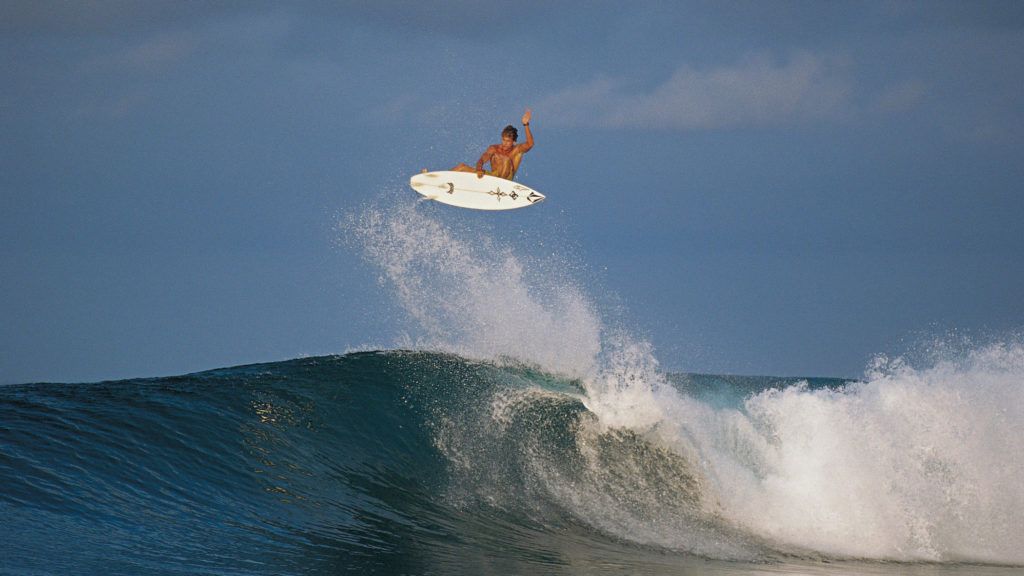
What is a bottom turn? After catching the wave and dropping down the green face, you’ll need to turn left or right to stay in the powerful section of the wave. The turn that you perform at the bottom of the wave is known as the bottom turn. Not only will this turn allow you to lengthen your ride, but you’ll use this maneuver to navigate oncoming sections and start connecting maneuvers.
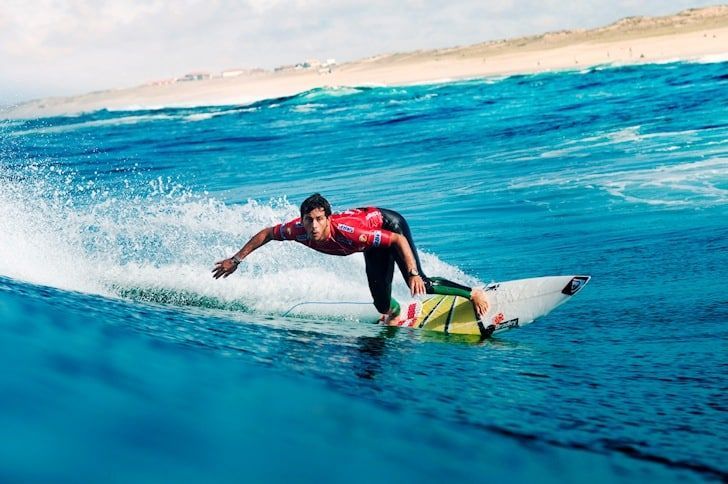
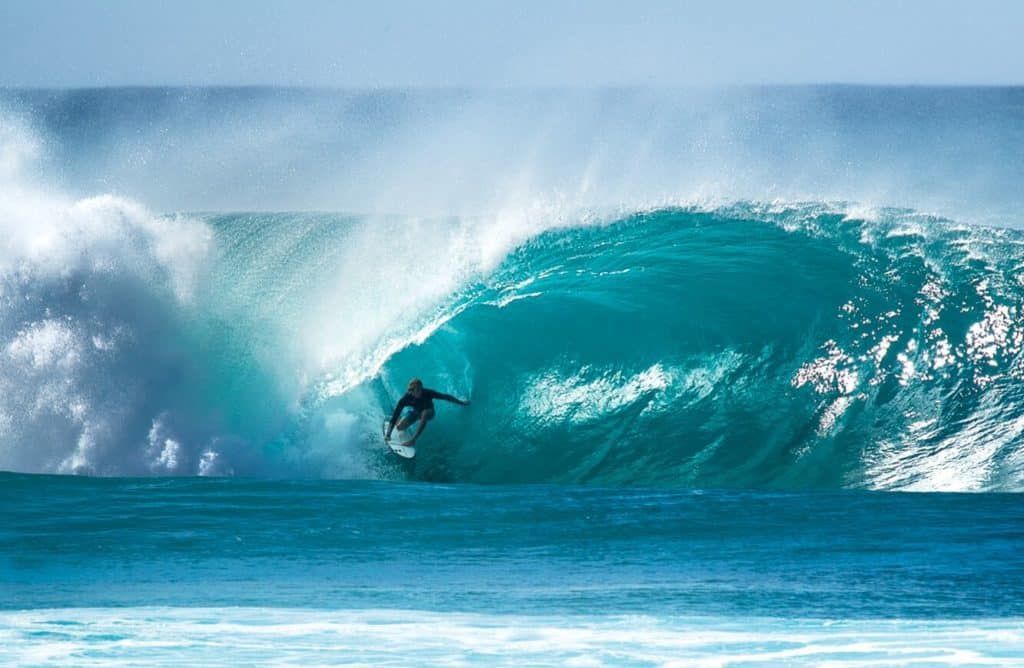
So let’s take step by step. When you’re paddling for a wave, you need to know (before standing up) if you’re going left or right. Depending on the wave’s direction, you’ll either be pushing off your toes (front-side bottom turn) or off your heels (backside bottom turn). You’ll need to anticipate the speed of the wave because this will determine how deep you draw out the bottom turn. If the wave is walled up and racy, you’ll make a very quick, mid-face bottom turn. If the wave is slow and lumpy, then you can drop straight down the wave towards the beach and enjoy a stylish, drawn out bottom turn in the flats. Once you’re riding down the wave’s green face, you’ll most likely perform more bottom turns with each approaching section.
 
Surfing champion, John John Florence explains it well “I think a good bottom turn really does set the pace for the whole wave. You want to get really low over your board as you begin your turn. You can generate a lot more power out of your legs that way. It’s kind of like pumping on a half pipe with a skateboard; you bend your knees in the transition and kind of push down as you’re coming out of it.”

One of the first tricks that intermediate surfers do (and generally by accident) is a floater. This  trick is used to float over minor sections and maintain, or even generate, speed. A well-timed floater can look really cool if it’s done swiftly or on a big closeout section. The key to a successful floater is starting with the proper bottom turn. Since you’re not aiming to catch air or pop the fins out the back of the wave, you’ll just need a mid face bottom turn so you can approach the lip at a 45° angle. You’ll need to be going fast down the line, eye the section you’d like to float over, do a mid face bottom turn while moderately flexing your knees, and aim the nose of your board towards your destination. The wave will do the rest of the work pushing you back in front of the wave.
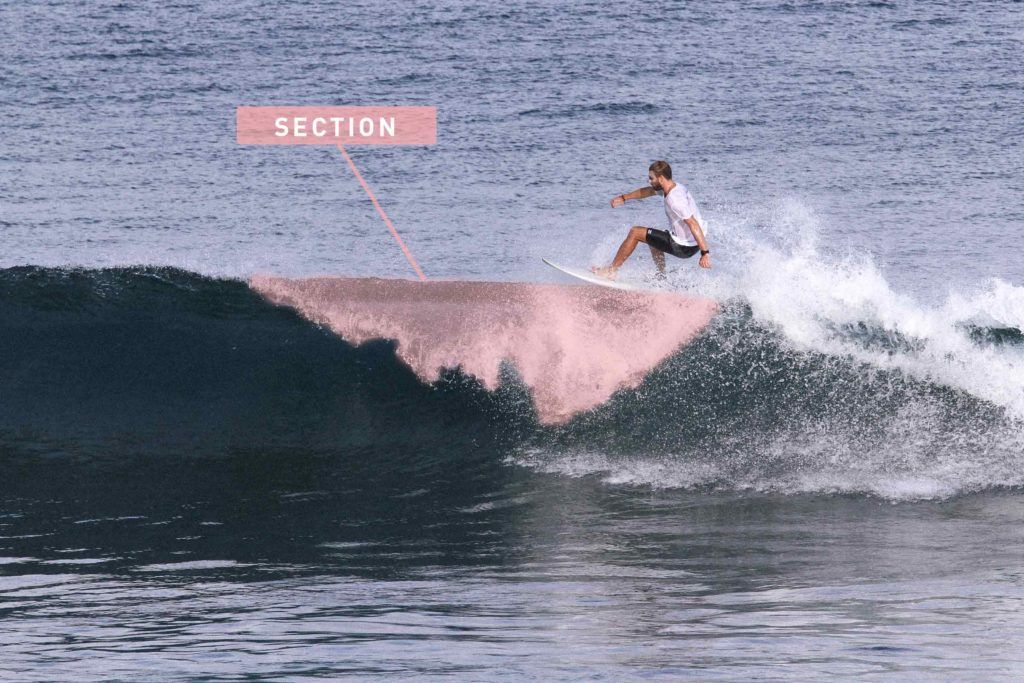
As you master the floater, you’re going to progress with cutbacks and snaps. Generally speaking, a long drawn out cutback doesn’t require a very deep bottom turn either. Really you just want an extra mid face bottom turn to generate extra speed so you can swing the board back around towards the white water.
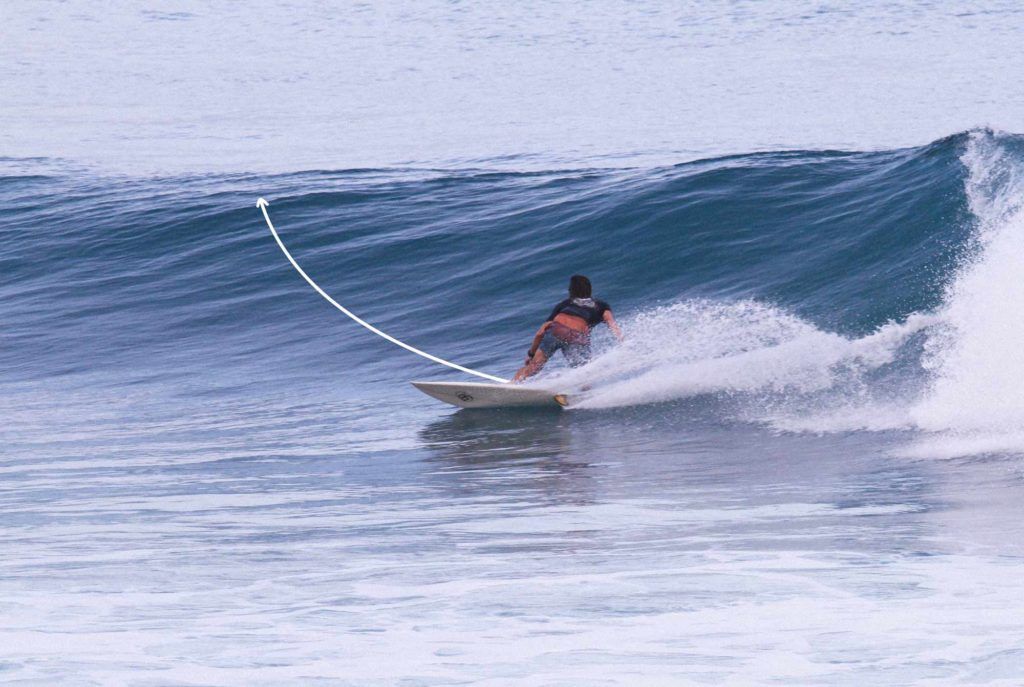
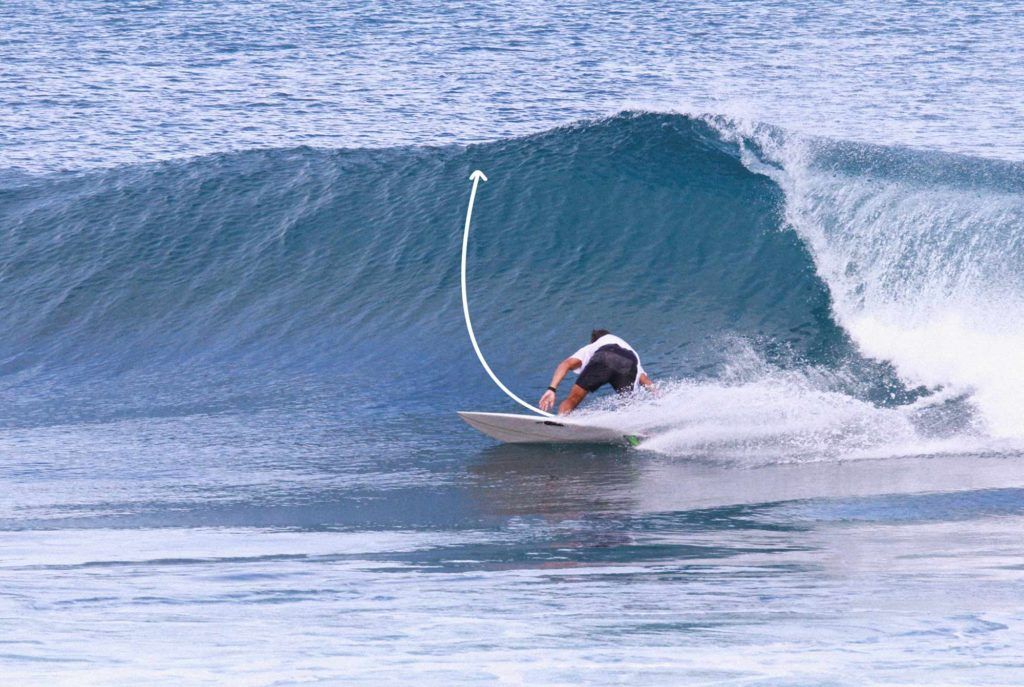
As you master the cutback and small carves, the next trick you’ll want to do is a big vertical snap. To perform a proper snap in the pocket of the wave, you’ll need to do a deep bottom turn to the the point where you’re low enough to drag your hand along the water and your outer fins start to disengage. To do a proper pocket snap, you’ll need a ton of speed, a proper stance with a little more than half your weight on the back foot, and a deep bottom turn that will allow you to vertically climb the wave and approach the lip with a 90° angle. Notice in the photo below how low the surfer is and how flexed their knees are.
Even when you have 20+ years of surfing experience, you’ll still be analyzing every single one of your turns, but the one you should really be concentrating on is a bottom turn. If you have any questions or feedback, we’d love to hear from you. Shoot us an e-mail at  Witchsrocksurfcamp@gmail.com  and let us know what you’d like to learn next. We offer an world class Intermediate surf program where we guarantee progression with our expert coaches. If you’d like to check dates or get a quote,  contact us  at 1-888-318-7873. Pura Vida!
 
por Witch's Rock - Costa Rica Surf Camp 25 de mayo de 2026
Most kids can start learning to surf between ages 4 and 7, depending on their comfort in the water, balance, confidence, and excitement about trying something new. At Witch’s Rock Surf Camp in Tamarindo, Costa Rica, we’ve taught surfing to children as young as 5 years old using beginner-friendly waves, personalized instruction, and a safe […] The post At What Age Can Kids Start Surfing? appeared first on Witch's Rock Surf Camp.

por Joe Walsh 17 de marzo de 2026
Planning a surf trip to Costa Rica is exciting — but the difference between a good trip and an unforgettable one comes down to preparation. From fitness and mindset to packing and expectations, arriving ready to surf will help you make the most of every session. 1. Understand What Surfing in Costa Rica Is Really […] The post How to Prepare for a Surf Trip to Costa Rica appeared first on Witch's Rock Surf Camp.

por Joe Walsh 13 de marzo de 2026
One of the most common questions we hear from guests at Witch’s Rock Surf Camp is this: “After a few days of surfing my ribs are completely bruised. What can I do to stop this?” If you’ve experienced rib pain or bruising while surfing, you’re definitely not alone. Many surfers—especially beginners or surfers on surf […] The post How to Avoid Rib Bruising From Surfing (And Paddle Pain-Free for Longer Sessions) appeared first on Witch's Rock Surf Camp.
por Witch's Rock - Costa Rica Surf Camp 23 de febrero de 2026
If you’re planning a surf trip to Costa Rica, you’ve probably come across the term “surf camp package.” But what does a surf camp package actually include? Most Costa Rica surf camp packages combine accommodations, surf coaching, surfboards, and transportation into one organized experience designed to simplify your trip and maximize time in the water. […] The post What’s Included in a Costa Rica Surf Camp Package? appeared first on Witch's Rock Surf Camp.
por Witch's Rock - Costa Rica Surf Camp 22 de febrero de 2026
You don’t paddle out at Ollie’s Point because it’s convenient. You go because when it’s on, it feels like Costa Rica handed you a fast, clean runway and said, “Go.” The catch is that Ollie’s is not a “just show up” wave. It’s a mission – tides, swell direction, wind, boat timing, and a lineup […] The post Ollie’s Point Guided Surf Tour: What to Expect appeared first on Witch's Rock Surf Camp.
por Witch's Rock - Costa Rica Surf Camp 20 de febrero de 2026
The moment that changes everything usually isn’t the first pop-up. It’s the second one – when your kid paddles back out smiling, you’re not checking the clock, and nobody’s hungry, sunburned, or overwhelmed. That’s the real promise behind a family surf trip in Costa Rica: shared wins, low stress, and enough structure that everyone actually […] The post Family Surf Camp in Costa Rica Done Right appeared first on Witch's Rock Surf Camp.
por Witch's Rock - Costa Rica Surf Camp 19 de febrero de 2026
You don’t fly to Costa Rica for “pretty good” waves. If you’re already comfortable in solid surf, the real win is efficiency: paddling out at the right break, at the right tide, with the right board under your feet – and not wasting a single prime window because a road washed out, the wind switched, […] The post Advanced Surf Tours in Costa Rica That Deliver appeared first on Witch's Rock Surf Camp.
por Witch's Rock - Costa Rica Surf Camp 18 de febrero de 2026
You know the feeling – you’re paddling out confidently, catching plenty of waves, and you can even make sections… but your surfing still looks nothing like it feels. In your head, you’re carving. On the wave, you’re kind of surviving. That’s the intermediate plateau, and it’s exactly why intermediate surf coaching with video analysis is […] The post Video Surf Coaching for Intermediates That Works appeared first on Witch's Rock Surf Camp.
por Witch's Rock - Costa Rica Surf Camp 17 de febrero de 2026
If you’re dreaming about learning to surf in Costa Rica, Tamarindo is one of the best places in the world to start. With warm water year-round, beginner-friendly waves, and experienced instructors, Tamarindo offers ideal conditions for first-time surfers. Many travelers take their first surf lesson here because the waves are consistent and the learning environment […] The post Beginner Surf Lessons in Tamarindo: Learn to Surf in Costa Rica appeared first on Witch's Rock Surf Camp.