The Evolution of the Modern Surfboard

Joe Walsh • July 3, 2018

Today’s modern thruster (three fin shortboard) has become the typical image associated with surfing. And while progression is the goal of the beginner surfer, everyone wants to eventually wind up riding the coveted shortboard – capable of fast turns and big airs. But how exactly did the modern shortboard come to be? To answer that question, let’s break down the evolution of the surfboard from the beginning.

1700’s
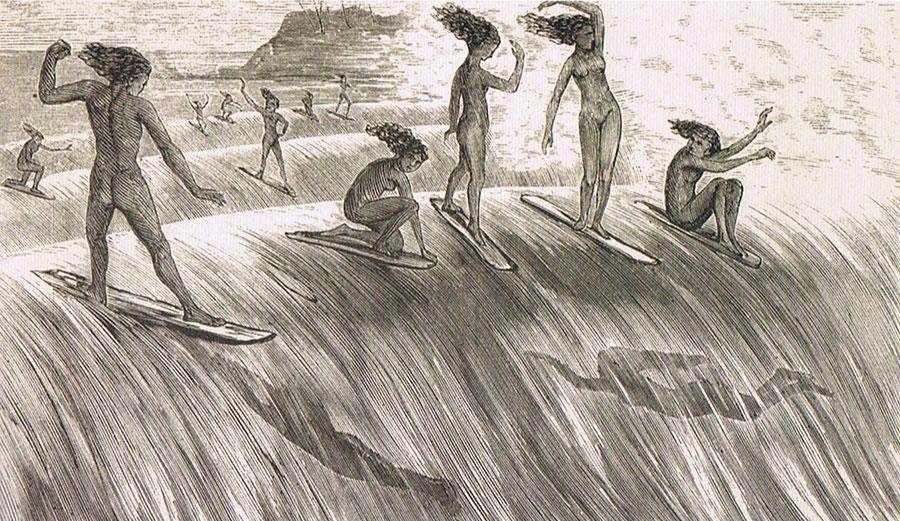
In 1778, Captain James Cook landed in Hawaii and European explorers encountered surfing for the first time. Early Polynesians rode a variety of boards, often as long as 25 feet and weighing up to 150 pounds. These boards were shaped out from Koa or Wiliwili trees. In ancient Hawaii, surfing was associated with religion and was often performed immediately after religious ceremonies or prayers.

Early 1900’s
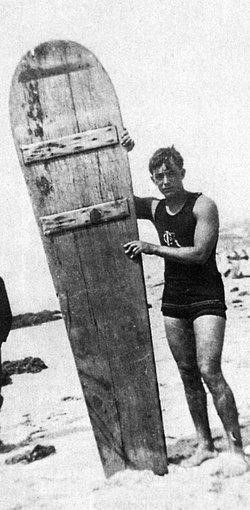
Fast forward two hundred or so years, and you’ll find George Freeth giving surfing demonstrations up and down the California coast on his signature redwood surfboard. While most redwood boards at the time were up to 16 feet in length, the talented George Freeth rode a cut-down version that stood just over 8 feet tall.

1920’s
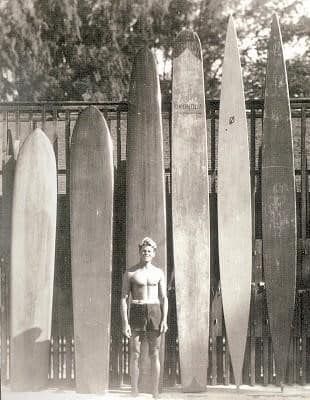
Tom Blake decides he’s had enough with his heavy redwood board, and drills holes in it to make it lighter and faster. This board is dubbed the “Cigar Board,” and would eventually become the first mass-produced surfboard.

1930’s
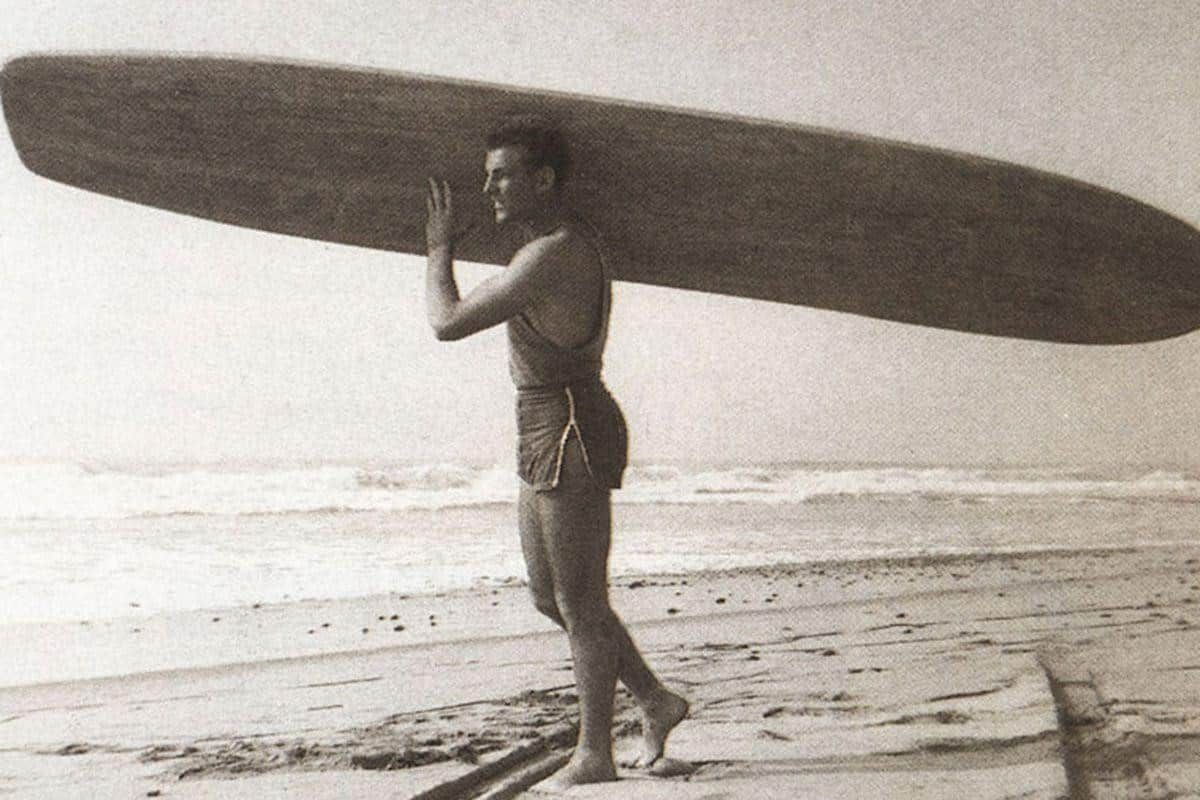
Shapers trade out heavy redwood for lightweight balsa, decreasing the weight of a surfboard from 100 pounds to 30 pounds. The tail of boards becomes tapered, a more hydrodynamic design that allows surfers to cut and ride in the barrel. Tom Blake in Hawaii and Bob Simmons in California experiment with fixed fins to make turning a breeze

1940’s
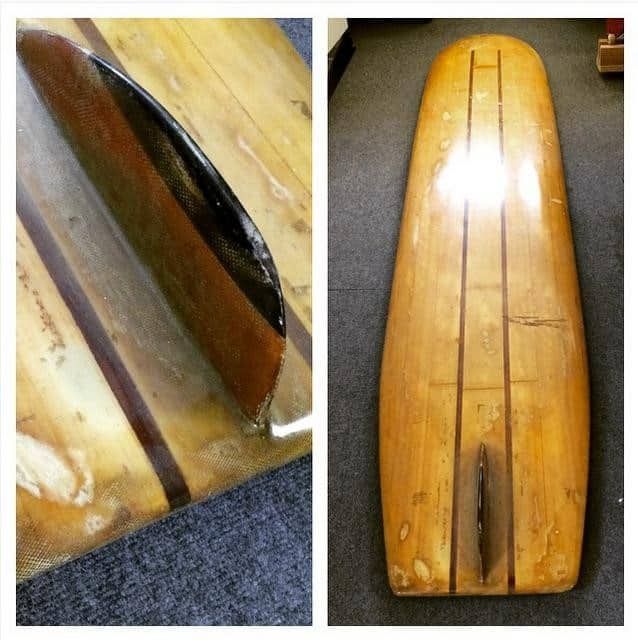
As World War II rages on, Bob Simmons continues to experiment, now with the rails and shape of the board, adding curves, foils, and distinct edges to the board. All of this, with knowledge Simmons picked up from a Naval Engineering book he happened upon during his time at Caltech. Simmons would later experiment with fiberglass resin.

1950’s
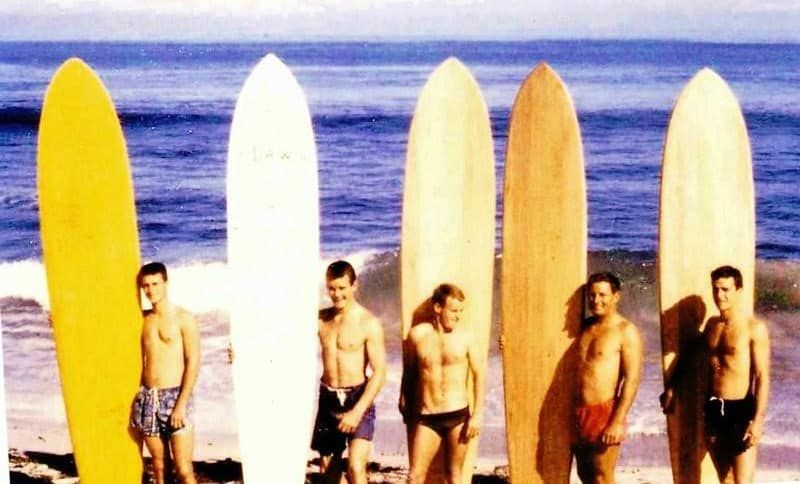
Fiberglass resin, invented in the 30’s became widely available after World War II. Balsa boards were now being coated in fiberglass, shapes would start to resemble what we know as the classic longboard. At this time, surf shops began to open, and surfboards became a commercial product. One of the earliest surf shops in California was started by Dale Velzy. In the mid 50’s Greg Noll, Miki Dora, and George Downing were charging big waves in Hawaii. Downing was one of the big names responsible for creating the “Big Wave Gun.”

1960’s
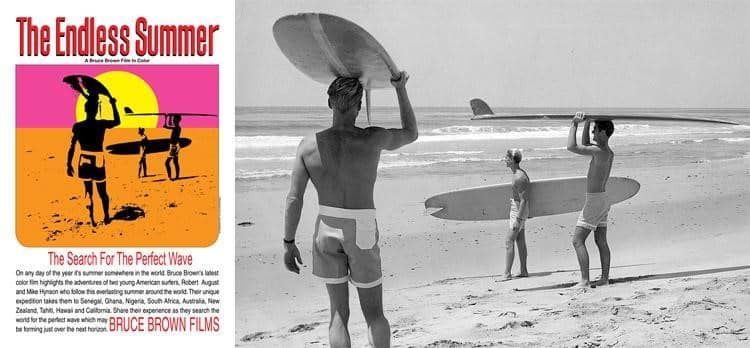
The increased availability of manufacturing materials in the 50’s along with famous films such as Gidget and The Endless Summer caused an eruption of surf culture. Boards were now made entirely out of fiberglass, although some balsa boards did stick around, and maintained their long shape until the end of the decade.

1970’s
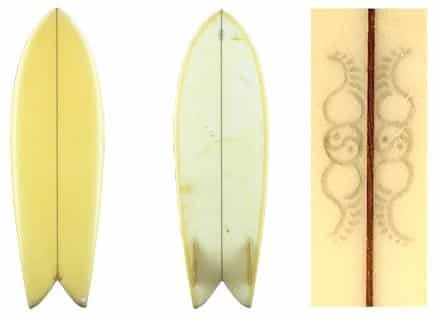
In the late 60’s and early 70’s the shortboard finally emerged. Boards dropped from 10 feet in length to 6 feet. This new design allowed surfers to ride right in the pocket of the wave, earning them the nickname “pocket rocket” made by Dick Brewer. In 1966 Nat Young won the world title on a shortboard and cemented them into surfing history. Around the same time, the single fin was replaced by the twin fin, giving way to the famous “Fish” shape. These high volume shortboards are still popular today.

1980’s
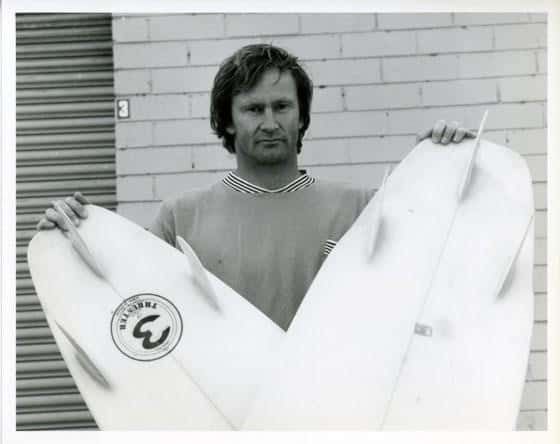
The 80s gave way to the board we all know and love, the thruster. In 1981, Aussie surfer Simon Anderson won Bells Beach on his brand new three fin thruster design. While Anderson wasn’t the first to put three fins on a surfboard, his win at Bell’s Beach, in which he showcased a high level of maneuverability compared to other surfers, cemented him in surfing history.

1990’s -Today
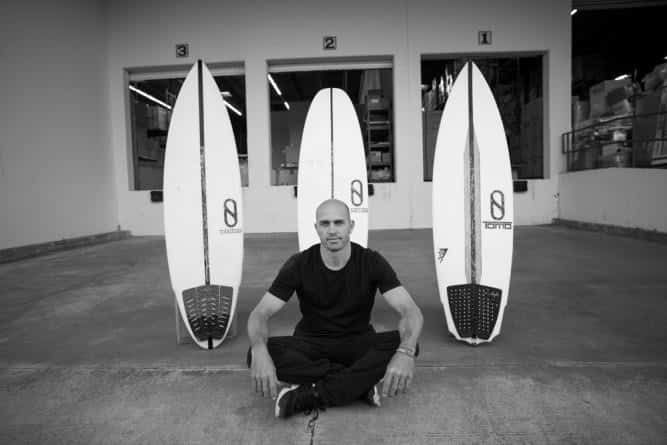
Surfing has changed a lot over the years, but the one thing that has remained consistent has been our desire to push the sport further and advance how we perform on waves. Today, at any given break, you’ll see a variety of board types: Twin fins, shortboards, longboards, even some finless models. While today’s shortboards are a bit shorter and thicker than those of the 90’s, the concept remains the same.

By Niki Hurren August 5, 2026
Best App for Surfers
By Witch Rocks Surf Camp August 5, 2026
Yes — Tamarindo is considered one of the safest beach towns in Costa Rica for tourists. Most incidents involve petty theft, while violent crime affecting visitors is rare. With basic precautions, it’s a very safe destination for surfers, families, and solo travelers. Costa Rica has long been known as one of the most stable, welcoming countries in Latin America. Yet online discussions, headlines, and occasional embassy alerts often raise the same question for travelers: Is Costa Rica safe — and is Tamarindo safe to visit? This guide separates facts from perception , explains why safety concerns are often misunderstood , and looks specifically at Tamarindo through the lens that actually matters: the real experience of travelers on the ground . At Witch’s Rock Surf Camp, we’ve hosted thousands of travelers, families, and solo surfers in Tamarindo since 2001 — giving us a real, on-the-ground perspective of what safety actually looks like here. Understanding Safety the Right Way: Tourist Reality vs Headlines When people search “Is Costa Rica safe?”, they are often shown national crime statistics without context. This creates confusion. Here’s the key point: 👉 Tourist safety is not measured by national crime averages — it’s measured by what happens in tourist areas. National crime data includes: Drug-trafficking activity Gang-related violence Urban neighborhoods far from tourism Domestic and local disputes unrelated to visitors These factors do not reflect the reality of beach towns, surf destinations, or established tourist communities like Tamarindo. The same logic applies everywhere: Crime in parts of Los Angeles does not define safety in Malibu Crime in New York City does not define safety in the Hamptons Crime in Mexico City does not define safety in Cozumel Tamarindo must be evaluated as a tourist destination — not as a national statistic. Is Tamarindo Safe Compared to Other Popular Destinations? When Tamarindo is compared properly — city to city, destination to destination — the picture becomes clear.
By Witch Rocks Surf Camp August 5, 2026
If you’re searching for the best surf spots on the Pacific side of Costa Rica, then you’re in the right place. Picture this – warm sun, crystal-clear water, and world-class waves calling out to surfers from near and far. Costa Rica consistently ranks as one of the best surf destinations in the world.
surf
By Witch Rocks Surf Camp August 5, 2026
If you are dreaming about a surf trip to Costa Rica you are probably asking yourself one big question. When is the best time to surf. The real answer is that Costa Rica has surf all year.
Witch’s Rock
By Joe Walsh August 5, 2026
Witch’s Rock, the wave from which we derive our namesake, popularized by The Endless Summer II most definitely lives up to the hype. If you’ve seen the movie, you know what this wave can do during a swell. Simply put, it’s a leg burning barrel. Witch’s Rock handles swell very well, it gets big, and it gets hollow. What
By Witch's Rock - Costa Rica Surf Camp May 25, 2026
Most kids can start learning to surf between ages 4 and 7, depending on their comfort in the water, balance, confidence, and excitement about trying something new. At Witch’s Rock Surf Camp in Tamarindo, Costa Rica, we’ve taught surfing to children as young as 5 years old using beginner-friendly waves, personalized instruction, and a safe […] The post At What Age Can Kids Start Surfing? appeared first on Witch's Rock Surf Camp.

By Witch's Rock - Costa Rica Surf Camp March 23, 2026
Trying to choose between Costa Rica and El Salvador for your surf trip? Both offer world-class waves, but the experience is very different depending on your level and travel style. Costa Rica: More versatile, beginner-friendly, and easier to travel El Salvador: High-performance waves, best for experienced surfers When it comes to surf, scenery, and adventure, […]
By Witch's Rock - Costa Rica Surf Camp March 19, 2026
Planning your first trip to Costa Rica? You’re in for an unforgettable experience filled with warm water, incredible waves, and a laid-back lifestyle known as “Pura Vida.” To help you make the most of your trip, here are essential travel tips every first-time visitor should know. 1. Understand the “Pura Vida” Lifestyle Costa Rica moves […]
By Witch's Rock - Costa Rica Surf Camp March 19, 2026
If you’ve ever traveled to Costa Rica — or even researched it — you’ve probably heard the phrase “Pura Vida.” But what does it actually mean? More than just a saying, “Pura Vida” is the heartbeat of Costa Rican culture. It reflects a way of life centered around positivity, simplicity, and appreciation. The Literal Meaning […]